Field House Museum
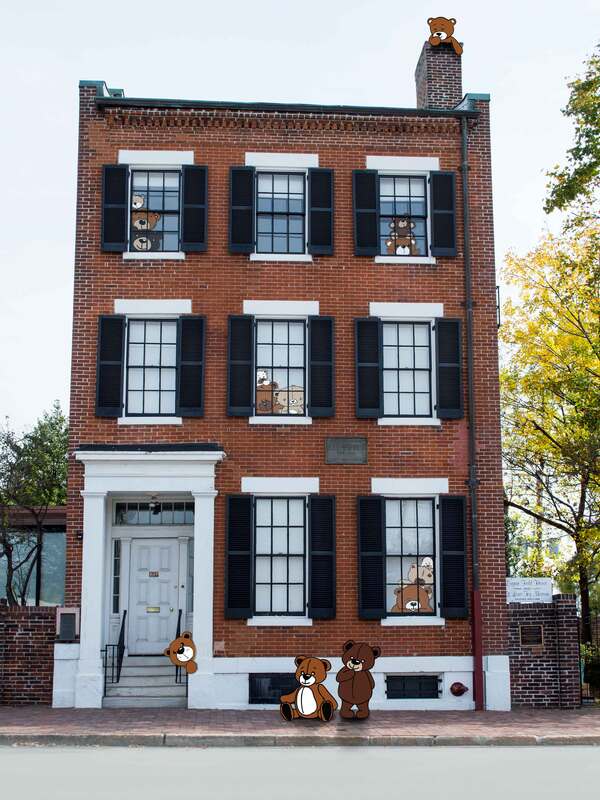
The Eugene Field House is St. Louis's first historic house museum. It is an early Victorian home with exhibits and collections that focus on the Field family: Roswell Field, an attorney for Dred Scott in the landmark Dred Scott v. Sandford court case, his wife Frances, and his son Eugene Field, a children's author. The home is a National Historic Landmark with collections that span subjects from the lives of Roswell and Eugene Field, to toys, books, and historic house items from the period.
Roswell Field
Roswell Field was a noted St. Louis attorney who began to work on the Dred Scott case pro bono in 1853. While Field formulated the legal strategy of the case to determine the freedom of the Scott family, he did not argue the case before the U.S. Supreme Court in 1856 becasue he felt that it needed a more high-profile attorney. Scott v. Sanford is known as one of the most controversial cases of the 19th century due to the decision to not grant the Scotts their freedom, and because of Chief Justice Roger B. Taney's Opinion which stated that enslaved people were not citizens and had no right to sue in federal court. He also wrote that the Missouri Compromise of 1820, which abolished slavery in the territories, was unconstitutional.
Eugene Field
Eugene Field is known as the "Children's Poet" and the "Father of the Personal Newspaper Column." He was born at the Field House in 1850, but after the passing of his mother in 1856, Eugene and his brother were sent to Massachusetts to live with other family. He enrolled at the University of Missouri where he studied journalism and co-founded The Missourian. He wrote for the St. Louis Evening Journal and quickly was promoted to editor. He got married in 1873 and had 8 children who were the inspiration for many of his poems. Eugene took a job at the Chicago Morning News while producing hundreds of poems and several books. With htheir success, Eugene moved his family into a larger house, enjoyed a much more comfortable lifestyle, and began collecting rare books. He passed away suddenly one night in 1895. In response, his former newspaper wrote that "all the children in the land mourn their laureate."

References
Denver Public Library. (n.d.) Eugene Field (1850-1895). Genealogy, African American & Western History Resources. https://www.history.denverlibrary.org/colorado-biographies/eugene-field-1850-1895
Field House Museum. (n.d.). The Dred Scott Case. https://www.fieldhousemuseum.org/about/the-dred-scott-case/
Missouri State Archives. (n.d.) Missouri's Dred Scott case, 1846-1857. Missouri Digital Heritage. https://www.sos.mo.gov/archives/resources/africanamerican/scott/scott.asp