
Inspiring Staff & Faculty of Sumner
Throughout Sumner High School’s history, there have been many faculty members who have been responsible for educating and supporting their students. These faculty members were often notable members of the community as well, with many helping to advance studies in African American history. These teachers helped make Sumner High School a desirable school for many students across the country. This section in particular focuses on the work of Charles H. Anderson, Dr. Herman Dreer, William “Pops” Beckett, and Wirt D. Walton who were on faculty at Sumner during the Great Depression. These staff members helped their students grow and become successful and were rewarded by being some of the first individuals to be inducted into the Sumner High School Hall of Fame. Read through their profiles to learn more about their careers and life while teaching at Sumner High School.
Charles H. Anderson
Charles H. Anderson was an English teacher at Sumner High School for 25 years and was the director of the Robeson Dramatic Club for students. Anderson cared for the community in numerous ways, including efforts to request aid from the Red Cross for the wife of Cleo Wright, who was a victim of lynching in Scott County. Charles Anderson is most notably remembered for his activism in 1942 to desegregate St. Louis University, after being denied admittance when he applied to take science courses. He would write numerous letters in protest, and publish a leaflet entitled “An Appeal By A Negro Catholic to the White Catholic Students of St. Louis University”. Eventually his actions would lead to the University accepting African American students in 1944. Anderson passed away in 1949 at St. Mary’s Infirmary from a heart attack, however his legacy would continue to live on through his induction into Sumner’s Hall of Fame in 1983.
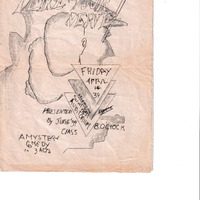
I Like Your Nerve Play Program
Alongside teaching English, Charles H. Anderson acted as the director for the Robeson Dramatic Club, a club for students interested in the performing arts at Sumner High School. The club put on numerous performances, including Aurania Rouverol’s “Growing Pains” and George Kaufman’s, “The Butter and Egg Man”.

Red Cross Aid
In Scott County in 1942 Cleo Wright was a victim of lynching, leaving behind a widowed wife. Anderson wrote a letter to the chairman of the Scott County Chapter of the Red Cross to inquire whether aid was provided to Wright’s widowed wife. It was clear in his letter that Anderson was concerned about the treatment of African Americans in the city and whether or not they would receive support from the Red Cross if needed. Excerpts from the correspondence were published in this article from The Daily Standard.

1949 Yearbook Photo of Charles H. Anderson
Wanting to take science courses to assist his wife’s mortuary practice, Charles Anderson attempted to enroll at St. Louis University in 1942, but was denied admission on the basis of race. He began a one-man protest against the University where he polled students on their opinions to admit African American students and wrote multiple letters appealing the decision. Eventually Anderson published a leaflet entitled “An Appeal By A Negro Catholic to the White Catholic Students of St. Louis University”. As his protest continued, Anderson gained support from numerous students and Catholic leaders, eventually leading to the desegregation of St. Louis University in 1944.
Dr. Herman Dreer
Dr. Herman Dreer was a notable educator who taught at numerous schools in the St. Louis area including Sumner High School, Stowe Teachers College (now Harris-Stowe State University), and Douglass University. While at Sumner, Dreer taught history, English, Greek, German, chemistry, and sociology, as well as acting as the assistant principal from 1930-45. Throughout his teaching career, Dreer focused on educating students on the richness of African American history and assisted in the organization of the Saturday School of Negro History, which was designed to help teachers incorporate African American history into their curriculum. Outside of teaching, Dreer was a minister at King’s Way Baptist Church and a notable author, writing books and articles alike. Dr. Herman Dreer sought to improve higher education opportunities for African Americans and was responsible for the re-establishment of Douglass University in 1935.

Photograph of Dr. Herman Dreer
Dr. Herman Dreer was a significant educator at Sumner High School and made a continuous effort to teach his students the history of their ancestors. Dreer, alongside other St. Louis educators, would be responsible for organizing St. Louis’ first Negro History Week in 1927. Because of his legacy as a Sumner educator, he was inducted to the Sumner High School Hall of Fame in 1983.

Dr. Herman Dreer And Julia Davis With Teachers Trained At Saturday School Of Negro History
To ensure African American history was being taught to students, Dr. Herman Dreer and other St. Louis educators organized the Saturday School of Negro History. This program would help educate teachers on African American history and help them discover ways to incorporate the history into their teaching curriculum. Dr. Dreer is pictured (second row, first person from left) with Julia Davis, another notable St. Louis educator, with some of the teachers they trained at the Saturday School.

Newspaper Article Announcing the Opening of Douglass University
Dr. Herman Dreer was concerned regarding the lack of higher education opportunities for African Americans. To combat this, Dreer re-established Douglass University, a school for African Americans in 1935 while working at Sumner High School. Although the university received some funding during its re-establishment, it would be mainly a self-funded institution. Due to the financial crisis of the Great Depression, the university closed its doors in 1942. Dreer was not discouraged however and would re-open Douglass University the following year. This article from The St. Louis Post Dispatch announced the opening of the university in 1935, highlighting Dreer’s efforts.
William "Pops" Beckett
William “Pops” Beckett was the physical education director at Sumner High School from 1917 to 1952 and was fondly referred to as “Pops” by his students. While at Sumner High School Beckett coached the football team through many victories. Prior to his employment at Sumner High School, Beckett worked as the head football coach at Howard University. In 1906, Beckett became the first African American graduate of Springfield College in Massachusetts, then known as the International YMCA Training School. Beckett would be a continuous supporter of athletics within the community through his position as a physical education director at YMCAs within St. Louis and is credited with introducing basketball to African American high schools in the east. Beckett was inducted into Sumner’s Hall of Fame in 1982.

St. Louis Sumner to Play Kansas City Sumner
Sumner High School’s athletic department was often successful when competing with other schools. Their successes would become a piece of pride for the community, with their games being advertised in different St. Louis newspapers. Although the most notable team rivalry was between Sumner High School and Vashon High School, Sumner would end up competing with Sumner High School of Kansas City. This news article from the St. Louis Globe-Democrat in 1939 announces the upcoming match between the two schools and discusses Pops’ predictions of the game.

William "Pops" Beckett with Tarbell Award
William Beckett became the first African American to graduate from Springfield College in Massachusetts in 1906. During his enrollment, the school was known as the International YMCA Training School. In 1947, Beckett was awarded the college’s Tarbell Award, given to Springfield Alumni who demonstrated outstanding service to their alma mater. Pictured is William Becket (right) receiving the award at Springfield College.

City Park Named for William "Pops" Beckett
William “Pops” Beckett was beloved by Sumner High School and the St. Louis community alike. Following his retirement in September of 1952, the community chose to celebrate Beckett by naming a city park in his honor. The park held a naming ceremony in February of 1953 which had around 250 attendees. This news article from the St. Louis Globe-Democrat details the celebration of Beckett.
Wirt D. Walton
Wirt D. Walton was the Music Director at Sumner High School during the 1930s & 40s. Walton was responsible for many successes of the choir and A Capella group at Sumner High School, which resulted in the school receiving invitations to other school performances in the Missouri & Illinois areas. He was noted for being a fantastic choir director, being described as the best in the choir field by some, where people would often note that the students performed like professionals. Outside of his career at Sumner High School, Walton would teach at Harris-Stowe University and was the organist and choir director at All Saints’ Church. Prior to his death in 1987, Walton was honored at Sumner High School through his induction to the Sumner Hall of Fame in 1982.

Sumner's Acapella Choir
While employed as the Music Director at Sumner High School, Walton was responsible for much of the choirs’ success. Many members of the community who listened to the choir would recall how the students acted as professional musicians when performing and greatly respected Walton. Many of Walton’s students would become professional musicians, including Chuck Berry. Pictured is Wirt D. Walton directing Sumner’s A Capella choir in 1953.

Sumner Alma Mater
Wirt Walton composed many pieces throughout his lifetime. The most notable piece to Sumner High School was his composition of Sumner’s Alma Mater song in 1933. The Sumner Alma Mater is the official anthem for the high school and is often sung during important celebrations such as graduation ceremonies.

Students Make Pilgrimage to Lincoln's Home
Wirt Walton was known for being a wonderful choir director by the community and other directors alike. Director E. Carl Lundgren from Springfield High School was so impressed with Walton’s A Capella choir when he visited St. Louis that he invited Walton to Springfield in 1939. After the performance black and white students ate together in the cafeteria, a sight that was so new to the time that the story made its way into this article from the New Pittsburgh Courier.

Wirt D. Walton Writes K.U. Song
Walton composed many songs throughout his career for multiple schools. On one occasion in 1941, Walton took part in a competition for the University of Kansas’ 75th anniversary to compose a new school song. Walton was awarded first place, which included a prize of $50 for his piece “Mount Oread, I Love You”. The song is unfortunately no longer used by the university but is still a piece of its rich history. This significant event was documented in this article from the St. Louis Globe-Democrat.