As the United States entered December of 1941, the storm clouds of war were on the horizon. German tanks had overrun France and were racing East deep into the Soviet Union while Japan was continuing its expansion into China. In light of these serious developments, President Franklin Delano Roosevelt had begun to fight the nation’s isolationist attitude and urge the country to arm itself for the fight he knew was inevitable. For the moment however, the industrial giant of American industry continued to sleep, content to believe that the two vast oceans on its East and West coast would prevent the war from reaching it. However, this tranquility was shattered on December 7th, when the Japanese military launched a surprise attack on the U.S. naval base at Pearl Harbor in Hawaii.
As details of the attack filtered into the homes across the country, the reaction was swift and immediate. First came a profound sense of disbelief mixed with panic. If the Japanese U.S. had successfully attacked once, they could do so again. The woeful state of the U.S. military at the time meant that any city could be considered a target either by enemy troops or saboteurs waiting to strike. The mayor of St. Louis even took the precaution of fingerprinting all city employees. However, the shock and hysteria soon gave way to grim determination. In cities and towns across the country, people resolved themselves to do whatever it took to avenge Pearl Harbor and win the war that had been forced upon them.
(Image courtesy of Missouri Historical Society, St. Louis)
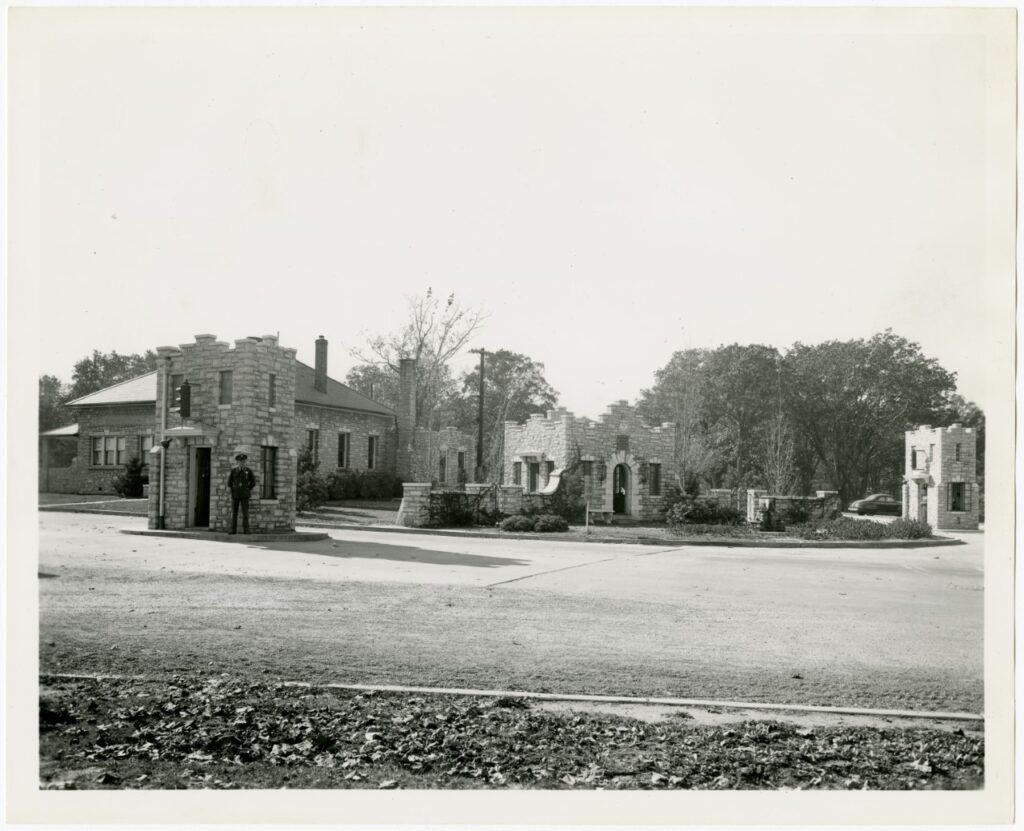
At the outbreak of the war the citizens of St. Louis were eager to prove their patriotism by joining the armed forces to serve and defend their country. To overcome the disparity in manpower, the army alone called for five million men, with another million needed for the air corps, navy, and marines. Throughout St. Louis, men and women rushed to enlist as soldiers or civilian aid workers. By February of 1942 alone, 80,600 men from the city had joined for the first draft. Many of these new enlistees were directed to the training Camp at Jefferson Barracks just South of the city. Equally impressive were the figures reported by the city’s Office of Civil Defense (OCD) in April of 1942:
- 5,300 air wardens
- 2,899 auxiliary firemen and fire watchers
- 3,090 auxiliary policemen
- 3,373 people capable of administering medical assistance with an additional 52,556 women in Red Cross training
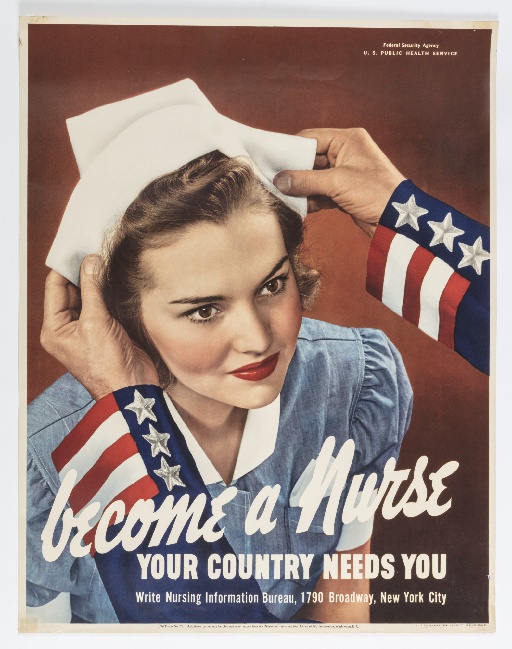
As the war dragged on the initial surge in patriotism began to wane as rationing made food and other materials scarce and wounded soldiers returning from the front revealed the grim cost of combat. In 1943, the very first convalescent camp in the nation was established west of the city at Babler State Park for soldiers from the Jefferson Barracks Hospital. As wounded veterans continued to return to the city, many sought out the jobs guaranteed by Congress in the Selective Service Act. Despite this, the completion for jobs amongst returning veterans and civilians was fierce. At one point in 1944, there were 650 new disabled veterans entering the job market every month.
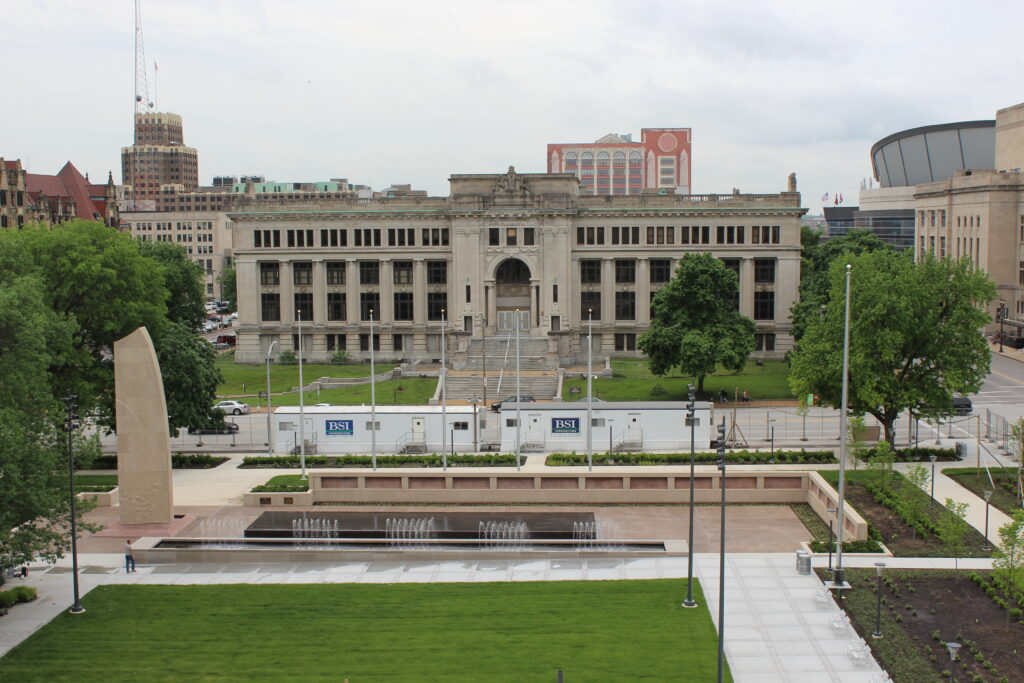
That same year, the total number of soldiers from the city that had died from combat or disease reached 748. The number of civilians that died in factory accidents in the same time span was slightly larger at 964, thus proving that the war was felt both home and abroad. Despite the sorrow and grief that accompanied these deaths, the city continued to support the war. Their efforts proved to have been worthy of the sacrifice On May 8, 1945 when V-E (Victory in Europe) Day was declared. Whistles blared, bells rang, and people cheered as the news spread across the city. After the celebrations however, came a somber reminder of what the city and the nation had sacrificed in the four year struggle. Roughly 5,000 people attended a city-wide prayer service at Soldiers Memorial. A month later, on July 4th, the cornerstone of the Memorial Plaza was laid by two veterans of the recently ended conflict. Today, this “Court of Honor” bears the inscribed names of all the military personnel from the city who died in WWII, as well as Kore and Vietnam.

Hi, this is a comment.
To get started with moderating, editing, and deleting comments, please visit the Comments screen in the dashboard.
Commenter avatars come from Gravatar.