What is a bomber without a bomb? As hard as it might be to believe, the U.S. was barely producing any significant amounts of gunpowder, much less other weapons of war. Perceptions from WWI that companies had engaged in profiteering had resulted in Congress passing legislation that severely discouraged American factories from making any weapons whatsoever. As the dark storm clouds of war began to approach however, American’s began to realize the importance of being prepared for another conflict, even if they still hoped the country could avoid fighting. Thus, by 1940 the government began the process of rearming itself by selecting sites across the country to begin transitioning from civilian to military goods. In October of the same year, the government choose St. Louis as the site of what would become one of the largest munitions plants in the world, producing up to 800 tons of TNT every day.
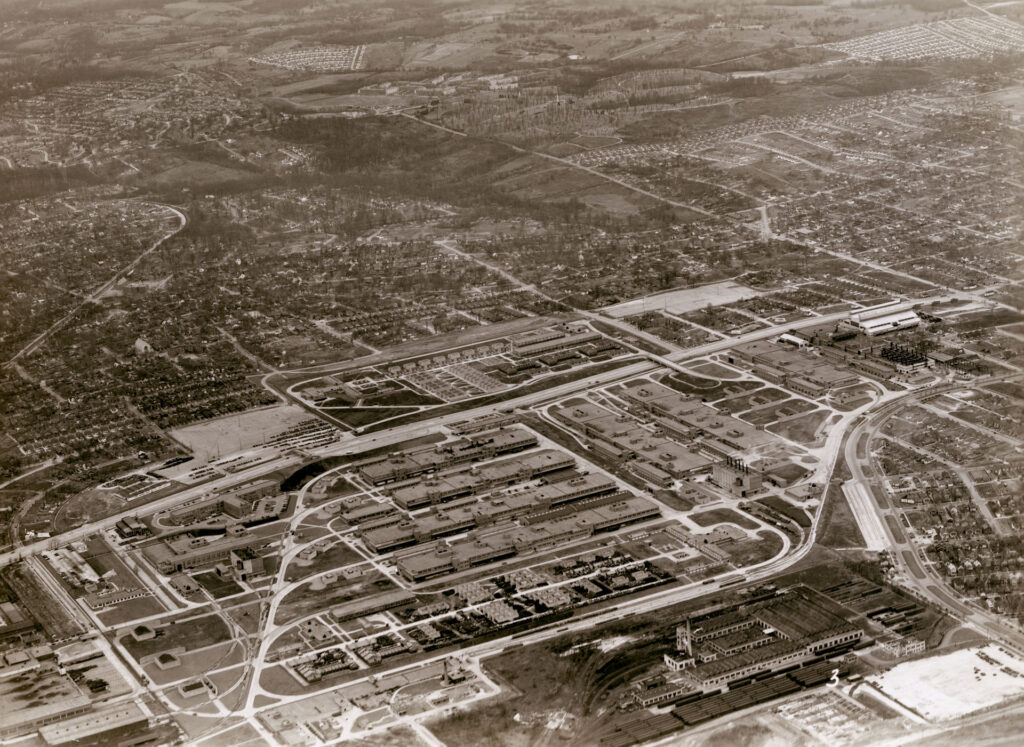
(Image courtesy of Missouri Historical Society, St. Louis)
The plant was to be operated by the Atlas Powder Co., and it would be built on 20,000 acres of land near Weldon Spring, with a price tag of $14 million to build the high-explosives factory. Construction of the facility would not begin until March 28, 1941, with production starting seven months later. After it was built, the plant was alternatively called U.S. Cartridge or St. Louis Ordinance by different people. Thanks to the foresight of American military planners, the army was able to accept the plants first completed order of munitions the day after the attack on Pearl Harbor. From that point until the end of the war, production would increase drastically. Within a year of the attack, the plant had produced over one billion rounds of ammunition.
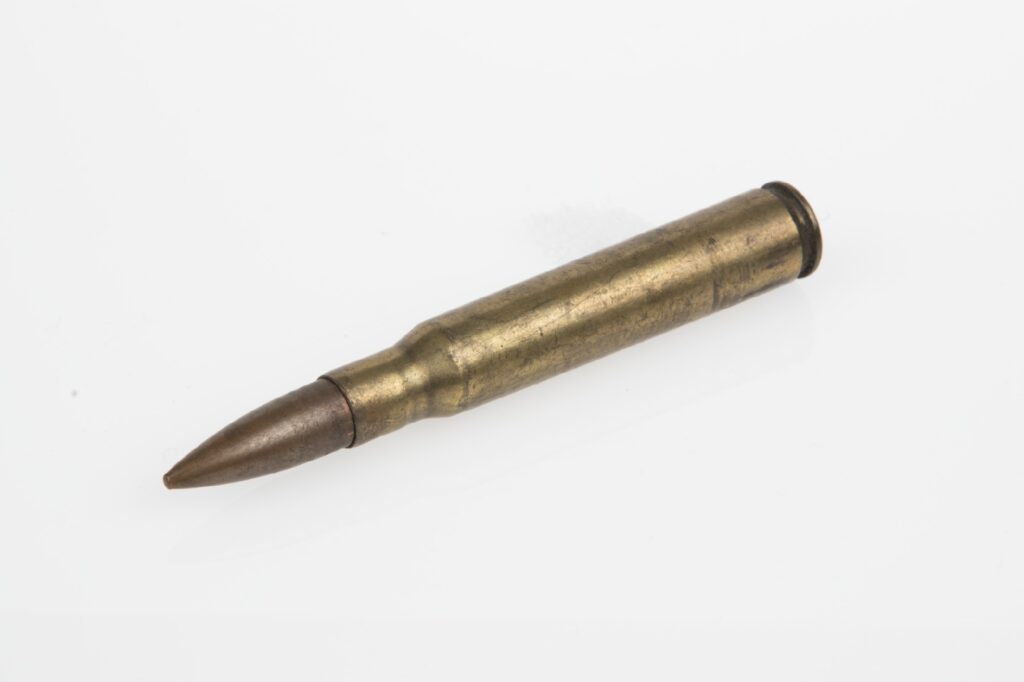
(Image courtesy of Missouri Historical Society, St. Louis)
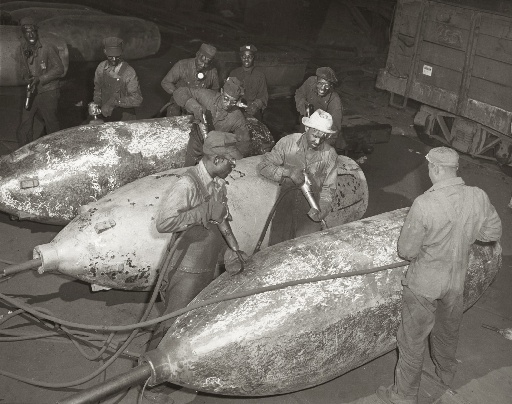
In order to produce this enormous quantity of ammunition, the plant required an equally impressive number of employees to keep the factory in operation. At its height of production, the ordinance plant employed 35,000 workers in three shifts six or seven days a week depending on the demand. However, the work environment at the plant was anything but harmonious. In the fall of 1942 only 800 of the workers were blacks. Many of these workers were also unskilled, creating tensions between them and their white counterparts who resented the thought of blacks having any positions equal or superior to their own. These conditions made the facility a ripe target for civil rights leaders who demanded that the company do more to desegregate the complex. Eventually the company responded by making one of their work shifts comprise of just African Americans.
At the same time that the company was in the midst of its racial struggles, another minority group was doing their part for the war effort by working at the plant. Out of all the company’s employees in summer of 1942, 1/3 of its workforce was composed of white women. By the middle of 1943, this ratio had increased to ¾. Although they didn’t face segregation like their fellow African American employees, they also dealt with inequality in the work place. For starters the company had mandatory outfits that the women were forced to buy from the company for $1.98 each. This was a major cost considering the fact that their salaries from the company were fifty-one cents an hour and a salary cap at fifty-nine cents an hour. Furthermore, this was only half the amount that their male colleagues received for the same workload. Still many of these women were glad just to have a job at all while their husbands were off fighting overseas.
Although U.S. cartridge was the largest munitions plant in the city, there were other companies that manufactured the numerous practice, chemical, and fragmentation bombs along with aircraft flares, anti-tank mines, and depth charges. Many companies were able to make the transition to weapons production with ease due to the fact that their consumer products like pipes for plumbing or stoves and iron ranges used similar production process. Scullin Steel produced 12,000 pound “earthquake” bombs for the RAF while Midwest Piping & Supply specialized in producing casings for 1,000 pound bombs. The company also autographed bombs for people who bought war bonds for the privilege. Then there were the various components and parts for explosives that St. Louis firms manufactured. Measuregraph Co. made mortar shells and parts, Carter Carburetor made bomb fuses, and Knapp-Monarch made grenade launchers and proximity fuses. Finally, there were the Machine gun and AA gun parts were manufactured by Jackes-Evans, S. G. Adams, Johnston Tin Foil & Metal Co.
As the end of the war neared, war plants across the country began laying off workers in droves. From 1944 – 1945 U.S. Cartridge let go over 15,000 workers without any form of compensation or severance pay to help support the recently unemployed until they could find new jobs. On July, 18, 1945, 5,000 of these workers held a large scale rally to demand over $2 million in severance pay. Despite this, their efforts proved to be in vain and the plant was converted into a records facility until it briefly returned to producing artillery for the Korean and Vietnam wars. The plant officially closed in 1969
