An army marches on its stomach, and St. Louis firms did their best to ensure that the men in the field could always count on having edible, if not particularly tasteful, rations to eat every day. Anheuser-Busch, Fischer Meat Co., Nestle, and Krey foods Inc. were just some of the countless companies in the city that kept the troops fed. However, keeping troops in the field fed at all times mean that there was little food left for civilians. One of the first items to be rationed was Sugar. Announcements of this led people across the country to engage in a frenzy of buying sugar to the point of hoarding. In 1941, each American typically consumed a little over two pounds of sugar per week. St. Louis also fell victim to the sugar craze. Restaurants hid sugar bowls, grocery stores began severely limiting the amount of sugar people were allowed to purchase, and the government eventually imposed price limits to combat the rapidly inflating price for the dwindling supply of sugar. After rationing was enforced, every person was limited to half a pound per week.
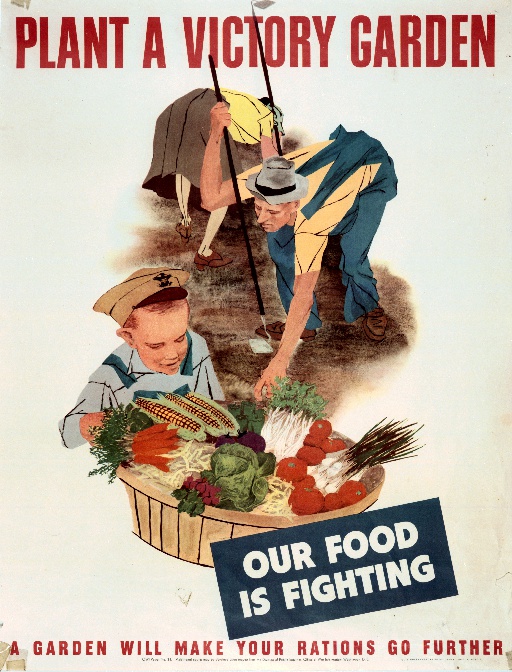
Sugar wouldn’t be the only food that was rationed. By 1943, practically everything edible was being rationed by the government. Coffee was reduced to one pound per person aged fourteen or older for a period of six weeks. The sale of butter, lard margarine, and cooking oil was prohibited starting at midnight on March 21st, prompting another wave of last minute shopping. Other dairy products like milk had limits placed on how much people could buy. Beer companies like Anheuser-Busch were required to send fifteen percent of their product directly to the troops. By far the most drastic food shortage to hit the city however was that of meat. Depending on the type of meat, St. Louis Stores were forced to reserve fifty to seventy-five percent of their produce for the military. Many people responded to this shortage by buying exotic meats like muskrat, shark, and even horse. The only relief people had from these shortages, was their ability to grow victory gardens of fruits and vegetables to help offset the shortages.
(Image courtesy of Missouri Historical Society, St. Louis)
Before the war, St. Louis was a center of fashion and textile production. Because of this, it was easy for several companies to quickly make the transition to military uniforms and articles of clothing. Three of the city’s largest shoe companies (Brown, International, and Johansen Bros.) made army boots, with 50 million being produced in 1943. During the war, Brown Shoe Co. developed a type of boot with buckles that fit over trousers. This innovation rendered the need for old style army leggings obsolete (though, not before the Bray Company of St. Louis produced 1.25 million pairs). The company also made extra wide boots for Russian troops so that the soldiers could wear multiple pairs of socks to prevent frostbite. Other manufacturers like Foster Bros. Manufacturing Co. made steel cots for the army and ship berths and fittings for the navy while Schlueter Manufacturing made over half of the helmets used in combat. Also worth mentioning is the Paul K Weil Co., which made flare parachutes.

(Image courtesy of Missouri Historical Society, St. Louis)
Just as with food, the war also forced clothing and textiles to be rationed. As a result, clothes for civilians had to follow various regulations such as a ban of cuffs for pants and sleeves, hoods, and patch pockets. Other items were banned entirely such as belts, scarfs, capes, and overskirts. The lengths of coats was also limited. One organization that was hit by the rationing was the St. Louis Police Department. Due to restrictions on brass, the department was unable to produce new buttons for the uniforms of its officers. Luckily, a company in Connecticut was able to supply a reserve of old police buttons.
The need for bandages and other medication was more dire than that for bullets throughout WWII. To this effect, Monsanto created chemicals for numerous military purposes such as gasoline, explosives, ammunition and ordinance, and especially sulfa compounds. Meanwhile the Heil Corporation and Absorbent Cotton Company produced surgical supplies while the Forest City Manufacturing Companymade nurses uniforms, surgical gowns, and bedding materials. However, the greatest contribution that St. Louis made to helping America’s sick and wounded soldiers came from John Nooter Boiler Works, and their production of the crucial antibiotic penicillin which helped to drastically curb recovery time. It was Nooter that invented 20,000 gallon tanks specially designed for the production of penicillin, thus drastically increasing the production capacity and supply of what was then a miracle drug.. To give an idea of how dire the need for Penicillin was, in 1943 there was only enough to treat 30-40 people a month whereas a year later the figure soared to 7,000 in a single day.

